Gut health has become one of those phrases that gets used so often it starts to mean everything and nothing at the same time.
So let's be specific. Your gut microbiome is a community of trillions of microorganisms living in your digestive tract — and the health of that community affects digestion, immune function, inflammation, energy, and increasingly, according to emerging research, mood and cognition. It is not a wellness trend. It is a biological system that responds directly to what you do every day.
The good news: the habits that improve it are not complicated. They are consistent, and consistency is the whole mechanism. Here are five that actually move the needle.
Habit 1 — Eat More Fiber. Daily. Without Exception.
If there is one single habit on this list that matters more than the others, it is this one. Dietary fiber is what feeds your gut microbiome. Not you — your gut bacteria. They ferment fiber and produce short-chain fatty acids, particularly butyrate, which is the primary fuel source for the cells lining your colon. Without enough fiber, those cells are not getting fed properly, and the microbial community that produces butyrate starts to shrink.
Research published in Cell Host & Microbe found that a high-fiber diet significantly increases microbial diversity — and diversity is the key marker of a healthy gut. A less diverse microbiome is consistently associated with a range of chronic conditions, from inflammatory bowel disease to metabolic syndrome.
The average adult in the US and Mexico consumes roughly 15g of fiber per day. The recommended amount is 25–38g. That gap is not a minor shortfall: it is a significant daily deficit that most people are running on without realizing it.
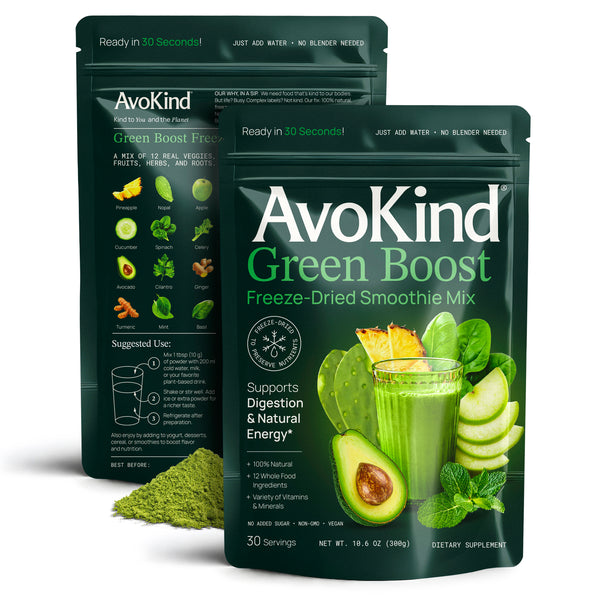
The practical fix is not a single food. It is a consistent daily habit, and one of the most underused fiber sources available is nopal cactus, a staple of traditional Mexican diets with some of the highest prebiotic fiber content of any plant food. Nopal contains both soluble fiber (which feeds specific beneficial bacterial strains) and mucilage (which creates a protective gel lining in the gut wall). It feeds the microbiome in a way that isolated fiber supplements like inulin powders do not — because the whole plant delivers compounds that work together, not a single extracted fiber in isolation.
AvoKind as a daily fiber habit:
AvoKind Green Boost contains freeze-dried nopal cactus, alongside 11 other whole food ingredients. One scoop in water every morning is a practical, consistent way to add whole-food prebiotic fiber to a routine that might otherwise be fiber-deficient before 9 AM. It doesn't require cooking, blending, or refrigeration. It requires 30 seconds and a shaker bottle, which is exactly what a daily habit needs to actually become one.
Habit 2 — Add Fermented Foods at Least Three Times Per Week
Fiber feeds the bacteria already living in your gut. Fermented foods introduce new bacteria, specifically live cultures of beneficial microorganisms that add to your microbial community.
Yogurt, kefir, kimchi, sauerkraut, kombucha, miso, all of these contain live bacterial cultures that survive the digestive process and contribute to a more diverse microbiome. A 2021 study from Stanford University published in Cell found that a high-fermented-food diet increased microbiome diversity and decreased markers of inflammation over 10 weeks — while a high-fiber diet alone did not show the same diversity increase without the fermented food component.
The key word in that finding is "without", fiber and fermented foods work better together than either does alone. This is why Habit 1 and Habit 2 belong on the same list.
You don't need to eat kimchi at every meal. Three servings per week — a yogurt at breakfast, a kombucha with lunch, some sauerkraut on a weeknight meal — is enough to start shifting the microbial landscape in a meaningful direction.

Habit 3 — Walk every day
Walking can be beneficial for gut health, and it's one of the simplest lifestyle habits associated with healthy digestion and overall gastrointestinal function.
Walking promotes healthy digestion: especially after meals, it can stimulate movement in the digestive tract (gut motility). This may help food move through the intestines more efficiently and reduce feelings of bloating or sluggish digestion.
It may also support a healthier gut microbiome: regular physical activity, including walking, has been associated with greater diversity in the gut microbiome in some studies. A diverse microbiome is generally considered a marker of gut health, although diet remains one of the strongest influences.
Habit 4 — Manage Blood Sugar Actively, Not Reactively
The connection between blood sugar and gut health is one of the most underappreciated relationships in nutrition. Blood sugar spikes — the rapid rise and fall that follows high-glycemic foods — create an inflammatory environment in the gut lining. Chronic low-grade inflammation from repeated blood sugar spikes disrupts the mucus layer that protects the gut wall, which is one of the proposed mechanisms behind increased intestinal permeability, sometimes called "leaky gut."
Research published in Nature found significant individual variation in blood sugar response to identical foods — meaning that managing blood sugar requires some personal attention, not just following a generic glycemic index table.
Practical habits that genuinely help: eating fiber before or with carbohydrates (which slows glucose absorption), moving after meals rather than sitting for an extended period, and avoiding high-sugar foods on an empty stomach. None of these are complicated. All of them are consistent.
Habit 5 — Prioritize Sleep Seriously
This one surprises people, but the gut-sleep connection is well-established and runs in both directions. Your gut microbiome operates on a circadian rhythm — specific bacterial strains are more active at certain times of day, and disrupting that rhythm through irregular sleep patterns changes the microbial community's composition and function. Research from the Weizmann Institute showed that jet lag-like circadian disruption in healthy volunteers caused measurable changes in their gut microbiome composition within days — and that these changes were associated with increased blood sugar and weight gain.
The practical implication is straightforward: consistent sleep timing (roughly the same bedtime and wake time every day) supports the gut microbiome's natural rhythm more than any specific sleep duration recommendation. It also means that a good gut health habit — getting enough fiber, eating fermented foods, eating diverse plants — works better when it's happening on a consistent daily schedule, not erratically.
The Common Thread: Consistency, Not Perfection
None of these five habits requires a complete dietary overhaul. They require showing up daily with a few specific, repeatable actions. Fiber every morning. Fermented foods several times a week. Walk. Blood sugar awareness at every meal. Consistent sleep timing.
AvoKind fits into this framework as a single morning habit that addresses Habits 1 with prebiotic fiber from nopal. Not a solution to gut health on its own. A practical, consistent anchor for the most important morning habits. The gut responds to what you do every day. Start with what you can actually do every day.
Frequently Asked Questions
How long does it take to improve gut health?
Research suggests measurable changes in microbiome composition can occur within two to four weeks of consistent dietary changes — particularly fiber and fermented food increases. Meaningful diversity improvements tend to take longer, around 10–12 weeks of sustained change.
Is nopal cactus a good source of fiber?
Yes — nopal is one of the highest prebiotic fiber sources available, containing both soluble fiber and mucilage. It feeds the gut microbiome differently than isolated fiber supplements like inulin because the whole plant delivers multiple fiber types and compounds that work synergistically.
Can I improve gut health without taking probiotics?
Yes. Fermented foods deliver live bacterial cultures without supplements. A high-fiber, high-diversity plant diet consistently outperforms probiotic supplementation in research on long-term microbiome diversity, because it creates the environment beneficial bacteria need to thrive rather than simply introducing them.
What is the difference between prebiotic and probiotic?
Prebiotics are the food for beneficial gut bacteria — primarily fiber. Probiotics are the beneficial bacteria themselves, delivered through fermented foods or supplements. Both matter. Prebiotics without enough beneficial bacteria have limited effect. Probiotics without enough fiber don't have anything to eat once they arrive.
How does blood sugar affect gut health?
Blood sugar spikes create an inflammatory environment in the gut lining that disrupts the mucus layer protecting the gut wall. Eating fiber before or with carbohydrates, moving after meals, and avoiding high-sugar foods on an empty stomach all help keep blood sugar stable — which is one of the most consistent gut-protective habits available.