Most morning energy advice falls into one of two camps. Either it's a complicated 90-minute ritual that assumes you have nowhere else to be, or it's "just drink more coffee," which works for about two hours before the crash arrives.
Neither approach addresses what's actually happening physiologically in the morning. Your body is coming out of an overnight fast. Cortisol is at its daily peak. Blood sugar is about to be influenced by whatever you do in the next hour — for better or worse. The right morning routine isn't about willpower. It's about working with these mechanisms instead of against them.
Here are three routines, each targeting a different lever — hydration, blood sugar, and movement — built to fit into a real morning, not an idealized one.
Routine 1 — Rehydrate Before You Caffeinate
After 7–8 hours without water, you wake up in a mild state of dehydration every single day. Research published in the Journal of Nutrition found that even mild dehydration — as little as 1–2% of body weight — measurably impairs mood, concentration, and perceived energy levels. Reaching for coffee before addressing this means you're stimulating an already under-resourced system.
The fix is sequencing, not elimination. Water first, coffee second — and ideally, water with something in it rather than water alone.
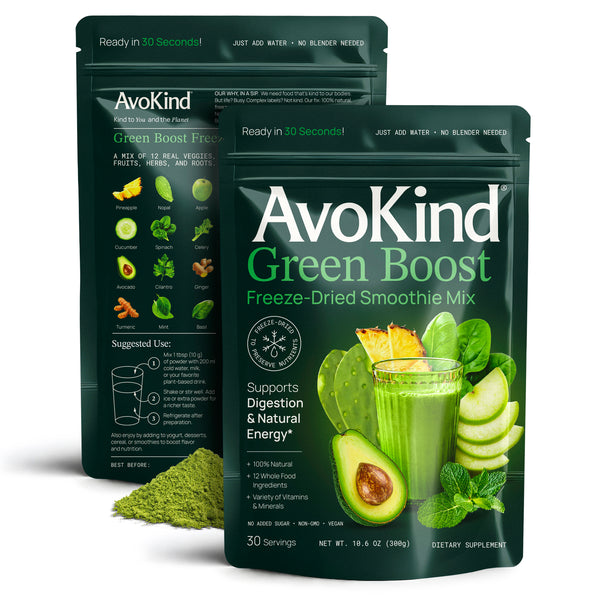
The practical routine: Before anything else, drink 12–16oz of water with a pinch of natural electrolytes or a scoop of a whole-food hydration mix. AvoKind's nopal cactus contributes natural mucilage and fiber that slows fluid absorption slightly, which some people find creates a more sustained hydration effect than water alone — alongside the avocado fat that helps the body absorb the fat-soluble vitamins A, E, and K present in the formula. This takes the same 30 seconds as making coffee, just before it rather than instead of it.
Why it works for energy specifically: rehydrating first means your body isn't compensating for two stressors — dehydration and caffeine — at the same time. People who do this consistently report less of the mid-morning crash that follows a coffee-only start.
Routine 2 — Eat Something With Fiber and Fat Before 9 AM
The single biggest energy mistake most people make in the morning isn't skipping breakfast — it's eating a breakfast that's almost entirely fast-digesting carbohydrate with no fiber or fat to slow it down. Toast, cereal, a pastry, even orange juice — all of these spike blood sugar quickly, which feels like energy for about 45 minutes and then drops you into the exact fatigue you were trying to avoid.
Research published in Diabetes Care has consistently shown that pairing carbohydrates with fiber and fat moderates the glucose response significantly compared to carbohydrates alone — meaning steadier energy rather than a spike-and-crash pattern.
The practical routine: Build breakfast around something with both fiber and healthy fat present, not as an afterthought but as the foundation. A whole-food smoothie with avocado as a base ingredient does this structurally — the oleic acid in avocado slows gastric emptying slightly, which is part of why fat-paired meals produce a flatter glucose curve. AvoKind takes 30 seconds and requires no blender, which matters on the mornings when "make a balanced breakfast" feels like an aspiration rather than a plan.
Why it works for energy specifically: steady blood sugar is the foundation of steady energy. You cannot out-willpower a glucose spike. You can structurally avoid creating one.
Routine 3 — Move Your Body for 5–10 Minutes Before You Sit Down
This is the routine people skip most often because it sounds like exercise advice rather than energy advice — but the mechanism here is distinct from fitness.
Research published in the British Journal of Sports Medicine found that brief bouts of movement — as short as 5–10 minutes — measurably increase self-reported energy and reduce fatigue more reliably than caffeine alone in several comparative studies, largely through improved circulation and the early-morning release of endorphins and norepinephrine.
The practical routine: This doesn't need to be a workout. A short walk outside, a few minutes of stretching, or even walking up and down stairs a couple of times before sitting at a desk is enough to shift the body out of overnight stillness and into a more alert state. The specific movement matters less than the timing — before the first long sitting block of the day, not after.
Why it works for energy specifically: sitting immediately after waking keeps the nervous system in a low-arousal state longer than it needs to be. A short burst of movement signals a transition that the body responds to measurably, independent of any dietary intervention.
Putting the Three Together
None of these routines require more time than what most people are already spending on a worse version of the same morning. Water before coffee. A real breakfast with fiber and fat instead of straight carbohydrate. Five minutes of movement before sitting down.
The honest version of a "morning energy routine" isn't a 12-step ritual. It's three specific, physiologically grounded habits, done consistently, that work with how your body actually regulates energy rather than overriding it with stimulants.
Start tomorrow with just one. Add the second the following week. By the third, you'll have a complete morning system that took less time to build than it takes to read about the next trending energy supplement.
Frequently Asked Questions
Which of these three routines matters most?
Blood sugar stability tends to have the largest measurable impact on sustained energy throughout the day, but hydration is the easiest to fix immediately and often produces a noticeable difference within the first week.
Do I need to do all three every single day?
Consistency matters more than perfection. Doing two of the three reliably will outperform attempting all three sporadically. Start with whichever feels most achievable given your actual morning.
Can I still drink coffee with this approach?
Yes — the routines aren't anti-caffeine, they're about sequencing and pairing. Water before coffee, and ideally something with fiber and fat in the same morning window, rather than coffee as the entire breakfast.
How long until I notice a difference in energy?
Hydration changes are often noticeable within a few days. Blood sugar stability from breakfast changes typically takes one to two weeks of consistency to feel clearly different. Movement-based energy effects are usually immediate, within the same morning.
Is this the same as a morning routine for weight loss?
Not specifically — this article is focused on energy stability, not weight management, though steady blood sugar and consistent movement both have documented benefits across several health markers.